Storytelling Guide — The Baron Who Rode a Cannonball
Story Explanation
"The Baron Who Rode a Cannonball" is a beloved story from the adventure fiction tradition that carries a powerful message for young readers. This tale, inspired by classic adventure novels and tales of daring exploration, uses action-packed stories of brave characters facing danger and overcoming obstacles to deliver a timeless lesson that resonates with children and adults alike.
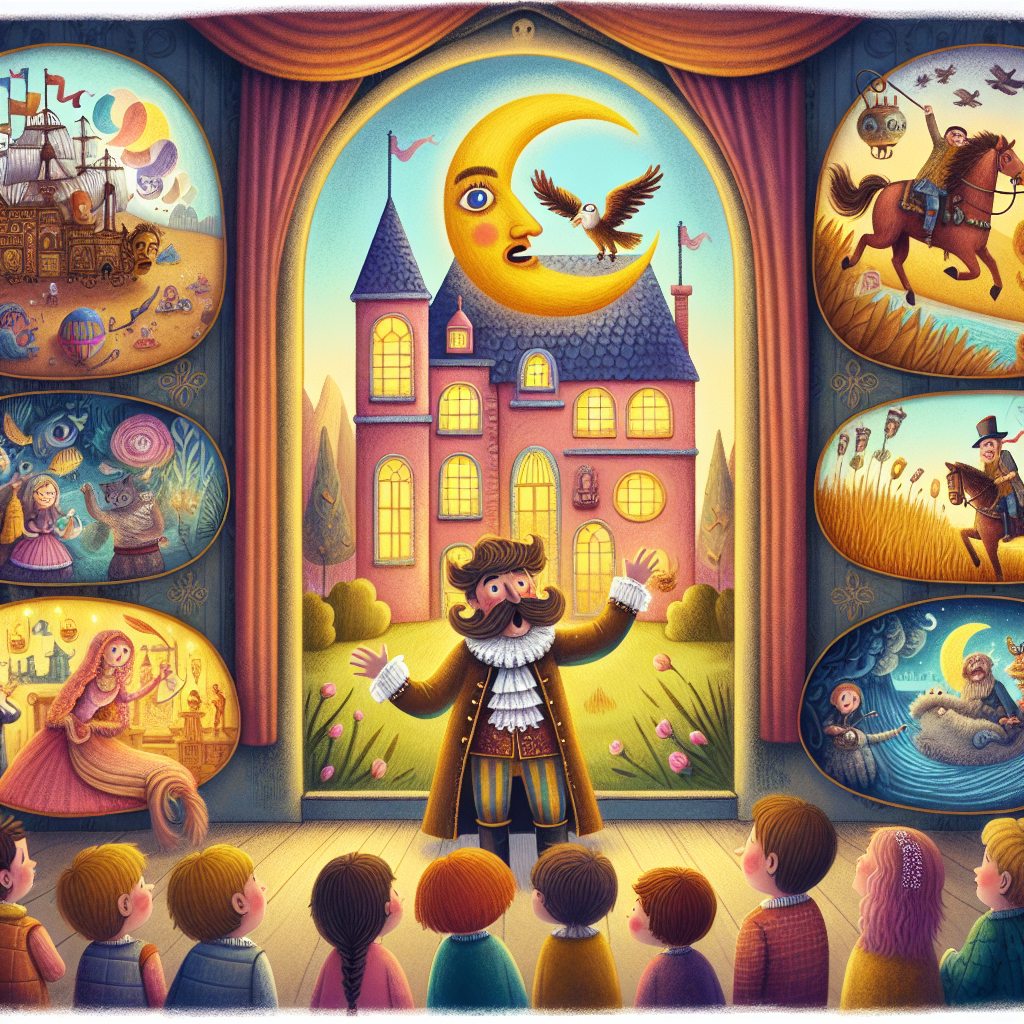
The story follows Baron Munchausen, Baron through a journey that ultimately reveals a profound truth about bravery, teamwork, resourcefulness. The narrative begins by establishing a relatable situation: In a quirky old house at the edge of a tiny town lived a man with a curly mustache named Baron Munchausen. He was famous for telling the most fantastic stories, and whenever he spoke, children and gro... As the story unfolds, the characters face challenges that test their values and force them to make important decisions.
The central message of "The Baron Who Rode a Cannonball" — Imagination can take you on the greatest adventures! — is woven naturally into the narrative, making it easy for children to absorb the lesson without feeling lectured to. This is what makes stories from the adventure fiction tradition so effective as educational tools: they teach through experience rather than instruction.
What sets this particular story apart is its ability to resonate with children of different ages. Younger children enjoy the colorful characters and engaging plot, while older children can appreciate the deeper themes of bravery, teamwork, resourcefulness, determination, resilience. This layered quality makes "The Baron Who Rode a Cannonball" a story that children return to again and again, discovering new meaning with each reading. For parents searching for kids moral stories or stories that teach values through storytelling, this tale is an exemplary choice.
From a cultural perspective, "The Baron Who Rode a Cannonball" is part of a rich storytelling heritage — inspired by classic adventure novels and tales of daring exploration. These stories have survived for centuries precisely because they speak to universal truths about human nature. When you share "The Baron Who Rode a Cannonball" with a child, you are participating in a tradition that has shaped moral thinking across generations. The story's enduring popularity is a testament to the power of narrative as a tool for passing wisdom from one generation to the next.
Summary and Key Themes
"The Baron Who Rode a Cannonball" tells the story of Baron Munchausen, Baron in a tale that explores what it means to live with bravery, teamwork, resourcefulness. The narrative opens with In a quirky old house at the edge of a tiny town lived a man with a curly mustache named Baron Munchausen. He was famous for telling the most fantasti... and builds through a series of events that challenge the characters to act on their values. By the story's conclusion, a clear moral emerges: Imagination can take you on the greatest adventures!.
Key themes in this story:
- Bravery: The story illustrates how bravery shapes the choices we make and the outcomes we experience. Children learn that acting with bravery leads to better results than acting impulsively.
- Teamwork: Through the characters' interactions, children see the value of teamwork in building relationships and earning trust. The story shows that teamwork is not a weakness but a strength.
- Resourcefulness: "The Baron Who Rode a Cannonball" demonstrates that resourcefulness matters even when no one is watching. The characters' choices reveal the importance of staying true to one's values.
- Determination: The story weaves in the idea that determination is essential to navigating challenges and growing as a person. Children come away understanding that determination can be practiced in everyday situations.
These themes make "The Baron Who Rode a Cannonball" a versatile choice for parents, teachers, and librarians looking for children's stories that teach life lessons in an engaging, age-appropriate way.
How to Tell the Story to Kids
The best way to teach kids through stories is to make the experience immersive, interactive, and emotionally engaging. Here is a comprehensive storytelling guide for parents and teachers who want to bring "The Baron Who Rode a Cannonball" to life:
- Set the Scene: Before you begin reading, create anticipation. Say something like: "Today we're going to hear an amazing story about Baron Munchausen, Baron. I wonder what will happen to them..." This primes children's curiosity and activates their listening skills.
- Use Expressive Voice and Gestures: Use different voices for each animal character. A deep, grumbly voice for larger animals and a squeaky, high-pitched voice for smaller creatures will immediately draw children into the world of the story.
- Pause to Ask Questions: At key turning points in the story, stop and ask: "What do you think will happen next?" or "Why do you think Baron Munchausen did that?" These prediction and reflection questions transform passive listening into active engagement and are among the most effective storytelling tips for parents.
- Encourage Participation: Encourage children to make animal sounds at key moments. When a character roars, let the children roar along. When a bird sings, invite them to whistle or chirp.
- Use Props and Visual Aids: Use hand puppets or stuffed animals to represent the characters. Children are naturally drawn to visual and tactile storytelling aids.
- Slow Down at Emotional Moments: When the story reaches its emotional peak, lower your voice and speak slowly. Let the weight of the moment sink in. Children are highly attuned to vocal cues, and this technique deepens their emotional connection to the narrative.
- End with Reflection, Not Lecturing: After the story, resist the urge to immediately state the moral. Instead, ask: "What did this story make you think about?" or "If you were Baron Munchausen, what would you have done?" Let children articulate the lesson in their own words — this is far more powerful than being told what to think.
Example of Moral Storytelling — Dialogue Samples:
**Narrator:** "And so, Baron Munchausen stood at the crossroads, wondering which path to choose..."
**Child prompt:** "Which path do you think Baron Munchausen should take? The sunny one or the shady one?"
Role-Play Ideas:
- Have children take turns being Baron Munchausen and Baron. Let them improvise the dialogue in their own words while keeping the story's key moments intact.
- Create a "story circle" where each child adds one sentence to retell the tale. This builds collaborative storytelling skills and tests comprehension.
- Ask children to draw their favorite scene from the story and then explain their drawing to the group. This combines artistic expression with narrative recall.
Learning Outcomes
"The Baron Who Rode a Cannonball" is not just an entertaining story — it is a rich educational resource that supports multiple areas of child development. Here are the key learning outcomes that parents and teachers can expect when sharing this story with children:
- **Listening and Comprehension Skills:** Following the narrative from beginning to end strengthens a child's ability to process sequential information, identify cause and effect, and remember key details. After hearing "The Baron Who Rode a Cannonball," children can practice retelling the story in their own words, which reinforces comprehension.
- **Vocabulary and Language Development:** Stories introduce children to new words and phrases in context. "The Baron Who Rode a Cannonball" naturally exposes young readers to descriptive language, dialogue patterns, and narrative structures that expand their vocabulary and improve their communication skills.
- **Emotional Intelligence:** Through the experiences of Baron Munchausen, Baron, children learn to recognize and name emotions such as joy, fear, disappointment, and hope. This emotional vocabulary is essential for healthy social development and self-awareness.
- **Critical Thinking and Problem-Solving:** The challenges faced by the characters in "The Baron Who Rode a Cannonball" encourage children to think about how they would respond in similar situations. Asking "What would you do?" transforms passive listening into active cognitive engagement.
- **Bravery and Values Formation:** At its core, this story teaches bravery, teamwork, resourcefulness. These are foundational values that shape a child's character and guide their interactions with others throughout life.
- **Imagination and Creativity:** The vivid imagery and narrative arc of "The Baron Who Rode a Cannonball" stimulate a child's imagination. Children who are regularly exposed to storytelling demonstrate greater creative thinking and are better equipped to generate original ideas.
These learning outcomes align with established early childhood education frameworks and make "The Baron Who Rode a Cannonball" a valuable addition to any home library or classroom reading list. Parents looking for how to teach values through stories will find this tale particularly effective because the lessons emerge naturally from the narrative rather than being imposed externally.
Discussion Questions for Kids
One of the best ways to deepen a child's understanding of "The Baron Who Rode a Cannonball" is through guided discussion. The following questions are designed to spark meaningful conversation after reading the story. Use them flexibly — let the child's curiosity lead the way, and treat every answer as valid and worth exploring.
Comprehension and Recall:
- What was your favorite part of "The Baron Who Rode a Cannonball," and why did it stand out to you?
- What lesson do you think this story is trying to teach us? Can you say it in your own words?
Critical Thinking and Reflection:
- Who was your favorite character in this story and why? Who was your least favorite?
- What is one thing you want to remember from this story?
Personal Connection:
- If you were Baron Munchausen, would you have made the same choices? Why or why not?
Tips for facilitating discussion: Avoid yes/no questions whenever possible. Instead of asking "Did you like the story?", try "What was the most surprising moment for you?" Give children time to think before they answer — silence is a sign of processing, not disengagement. If a child gives a brief answer, gently prompt with "Tell me more about that" or "Why do you think so?" These conversations are where the deepest learning happens.
Moral Development
"The Baron Who Rode a Cannonball" is a powerful tool for moral development because it presents ethical choices in a context that children can understand and relate to. Rather than lecturing children about right and wrong, the story allows them to witness the consequences of different choices through the characters' experiences. This narrative approach to moral education is supported by child development research, which shows that children internalize values more effectively when they encounter them through stories rather than direct instruction.
The moral of this story — Imagination can take you on the greatest adventures! — speaks directly to the developmental stage of children aged 7–12. At this age, children are beginning to understand that their actions have consequences and that the choices they make affect not only themselves but also the people around them. By discussing the characters' decisions and their outcomes, parents and teachers can guide children toward a deeper understanding of bravery, teamwork, resourcefulness.
One of the most effective ways to use "The Baron Who Rode a Cannonball" for moral development is through guided discussion after the story. Ask open-ended questions like: "Why do you think Baron Munchausen made that choice?" or "How do you think the other characters felt?" These questions encourage perspective-taking, which is a cornerstone of empathy and moral reasoning. Over time, children who regularly engage in these discussions develop stronger moral compasses and more nuanced understandings of complex social situations.
Stories from the adventure fiction tradition are particularly effective for teaching morals because they distill complex ethical principles into simple, memorable narratives. "The Baron Who Rode a Cannonball" follows this pattern perfectly — the lesson is woven so naturally into the plot that children absorb it without feeling preached to. This is the hallmark of effective moral storytelling: the lesson feels like a natural conclusion rather than an imposed rule.
Creative Activities and Crafts
Extending the story beyond reading with hands-on creative activities helps children process the themes of "The Baron Who Rode a Cannonball" on a deeper level. Research in early childhood education shows that combining storytelling with art, writing, and dramatic play significantly improves retention, comprehension, and emotional engagement. Here are practical activity ideas that parents and teachers can use:
- Draw the Characters: Have children draw Baron Munchausen, Baron in their favorite scene from the story. Encourage them to add speech bubbles showing what the characters might be saying or thinking.
- Create Animal Masks: Using paper plates, crayons, and craft supplies, children can make masks of the animal characters and use them to act out the story in a mini-play.
- Story Map: Help children create a visual story map divided into three sections — beginning, middle, and end. In each section, they draw or write the key events of "The Baron Who Rode a Cannonball."
- Write a Sequel: Ask children: "What happens next?" Encourage them to write or dictate a short sequel to the story, imagining what Baron Munchausen do after the story ends.
- Moral Poster: Children can create a colorful poster illustrating the moral of the story in their own words. Display it in the classroom or bedroom as a daily reminder of the lesson.
Tips for activity time: Let children choose which activity appeals to them most — autonomy increases engagement. There are no wrong answers in creative work. Praise effort and imagination rather than artistic skill. Display finished projects prominently to show children that their interpretations of the story matter. For classroom settings, consider turning these into group activities where children collaborate and share their creations with peers.
Tips for Different Age Groups
Children of different ages engage with stories in different ways. "The Baron Who Rode a Cannonball" is suitable for children aged 7–12, but how you present and discuss it should vary based on the child's developmental stage. Here is a guide to adapting this story for three key age groups:
- For Ages 3–5 (Early Listeners): Keep the reading session short and playful (5–10 minutes). Use exaggerated voices and animated facial expressions to maintain attention. Point to key moments and ask simple questions like "What do you see happening?" or "Can you make that sound?" At this age, children absorb values through emotional connection rather than explicit moral instruction. After reading, let them draw a picture of their favorite part and tell you about it in their own words. Repetition is powerful — young children love hearing the same story again and again, and each retelling deepens their understanding.
- For Ages 6–8 (Emerging Readers): This is an ideal age for "The Baron Who Rode a Cannonball." Children in this group can follow the full narrative arc and are beginning to understand cause-and-effect relationships. Pause at decision points and ask "What would you do?" After reading, have a brief discussion about the moral — but let the child lead. Encourage them to retell the story in their own words, which builds comprehension and confidence. You can also invite them to read parts of the story aloud to practice their reading fluency. Consider pairing the story with a creative activity like drawing, journaling, or role-play to deepen engagement.
- For Ages 9–12 (Independent Readers): Older children can engage with "The Baron Who Rode a Cannonball" on a deeper analytical level. After reading, discuss the characters' motivations, the author's choices, and whether the outcome was fair. Ask thought-provoking questions like "Do you agree with the moral?" or "Can you think of a real-life situation where this lesson applies?" Encourage them to write their own version of the story with a different ending, compare it to other stories from the adventure fiction tradition, or research the cultural background of the tale. This age group benefits from seeing stories as vehicles for complex ideas like bravery, teamwork, resourcefulness, and they can articulate their own moral reasoning with growing sophistication.
Regardless of age, the most important thing is to make story time a positive, screen-free experience built on warmth, curiosity, and shared attention. When children associate reading with comfort and connection, they develop a lifelong love of stories and learning.
Best Practices for Parents and Teachers
To maximize the educational impact of "The Baron Who Rode a Cannonball," keep these research-backed storytelling best practices in mind. Whether you are a parent reading at bedtime or a teacher leading a classroom read-aloud, these tips will help you make every storytelling session more meaningful and memorable:
- **Read the story yourself first** before sharing it with children. This allows you to identify the best moments for pauses, questions, and dramatic emphasis.
- **Create a cozy storytelling environment.** Turn off screens, sit close together, and make story time feel special. Children are more receptive to learning when they feel safe and comfortable.
- **Don't rush the moral.** Let children discover the lesson themselves through discussion rather than stating it outright. Ask guiding questions like "What did you learn from this story?" and validate their interpretations.
- **Revisit the story.** Children benefit from hearing the same story multiple times. Each retelling deepens their understanding and allows them to notice new details. You might be surprised by the new insights they share on the second or third reading.
- **Connect the story to daily life.** When you notice your child demonstrating a value from the story (such as bravery or determination), acknowledge it by saying something like "You're being just like Baron Munchausen in our story!"
- **Pair reading with writing.** After sharing "The Baron Who Rode a Cannonball," invite children to write a short journal entry, letter, or alternative ending. This reinforces comprehension and gives them creative ownership of the narrative.
- **Use the story as a springboard for conversation.** Great stories linger. Over the next few days, refer back to "The Baron Who Rode a Cannonball" when situations arise that echo the moral. This ongoing dialogue transforms a single reading into a lasting life lesson.
Above all, remember that the goal of sharing "The Baron Who Rode a Cannonball" is not to deliver a lecture but to open a door. The best storytelling moments happen when children feel safe to ask questions, share opinions, and make connections on their own terms. Your role as a parent or teacher is to be a guide, not an instructor — and the story itself does most of the teaching.
Frequently Asked Questions
- What age group is "The Baron Who Rode a Cannonball" suitable for?
- This story is recommended for children aged 7–12. Younger children (ages 3–5) will enjoy the narrative and characters, while older children (ages 6–12) will be able to engage with the deeper moral lessons and participate in discussions about the story's themes.
- How can I make "The Baron Who Rode a Cannonball" interactive for kids?
- There are many ways to make this story interactive. Use props or puppets to represent the characters, pause at key moments to ask prediction questions ("What do you think happens next?"), encourage children to retell the story in their own words, or have them act out scenes through role-play. You can also ask children to draw their favorite part of the story and share it with the group.
- What is the main moral of "The Baron Who Rode a Cannonball"?
- The central moral of this story is: Imagination can take you on the greatest adventures!. This lesson teaches children about bravery, teamwork, resourcefulness and helps them understand how these values apply to their own lives.
- How can I use this story to teach values at home?
- After reading the story, have a casual conversation about the characters' choices. Ask your child what they would have done differently and why. Connect the story's lesson to real-life situations your child has experienced. For example, if the story teaches about honesty, recall a time when telling the truth was important in your family. This bridges the gap between fiction and real life.
- How long does it take to read "The Baron Who Rode a Cannonball" aloud?
- The story itself takes approximately 3–5 minutes to read aloud at a comfortable, expressive pace. If you include pauses for questions and discussion, plan for a 15–20 minute storytelling session. This makes it perfect for bedtime reading or a classroom story time block.
- Are there similar stories I can read after this one?
- Yes! KidsStory has a large collection of Thrilling Adventures that share similar themes and storytelling styles. Browse our Thrilling Adventures category to find more tales that teach bravery, teamwork, resourcefulness. Each story comes with its own guide to help you make the most of the reading experience.
- What creative activities can I pair with "The Baron Who Rode a Cannonball"?
- Great activities to pair with this story include: drawing your favorite scene, acting out the story with friends or family, writing an alternative ending, creating a visual story map showing the beginning, middle, and end, or making a poster about the moral. For classroom settings, teachers can use the story as a writing prompt or pair it with a character education lesson about bravery. See the Creative Activities section above for more detailed ideas.
- How does "The Baron Who Rode a Cannonball" compare to other stories in this category?
- "The Baron Who Rode a Cannonball" shares the hallmarks of the adventure fiction tradition: action-packed stories of brave characters facing danger and overcoming obstacles. What makes it unique is its particular focus on bravery and the memorable way it illustrates this value through its characters and plot. Readers who enjoy this story will find many similar tales in our Thrilling Adventures collection on KidsStory, each with its own guide and moral lesson.